
Spring always feels like a reset button at Lan Su. The ponds brighten, the plants stretch awake, and our koi residents begin cruising around again after what looks, frankly, like a very luxurious winter nap. And this year? There are so many baby fish. In my entire 10 years at Lan Su, I do not think I have ever seen this many tiny flickering fish in the water all at once.
Everywhere I look, there is a little orange, gold, or speckled surprise darting between reflections of pavilions and stones. It is impossible not to feel that spring has arrived with extra energy.
Watching all these little fish has me thinking about one of the most beloved motifs in Chinese culture: 鯉躍龍門 (lǐ yuè lóng mén), “the carp leaps over the Dragon Gate.”

The story goes like this: in Chinese mythology, the Dragon Gate, or Longmen, sits high above a great waterfall flowing down from a legendary mountain. Many carp swim upstream, battling the current. But only the strongest, bravest, and most determined can make the extraordinary leap over the falls. And if a carp succeeds? It transforms into a dragon.
That is quite the career upgrade.
This image became a powerful metaphor in Chinese history. For scholars, especially those from humble beginnings, life could feel very much like swimming upstream. To rise in society, a scholar often had to study for over a decade and pass the imperial civil service examinations. The process was famously demanding, and success could completely change a person’s future. A scholar’s transformation, people said, was like a carp leaping the Dragon Gate.

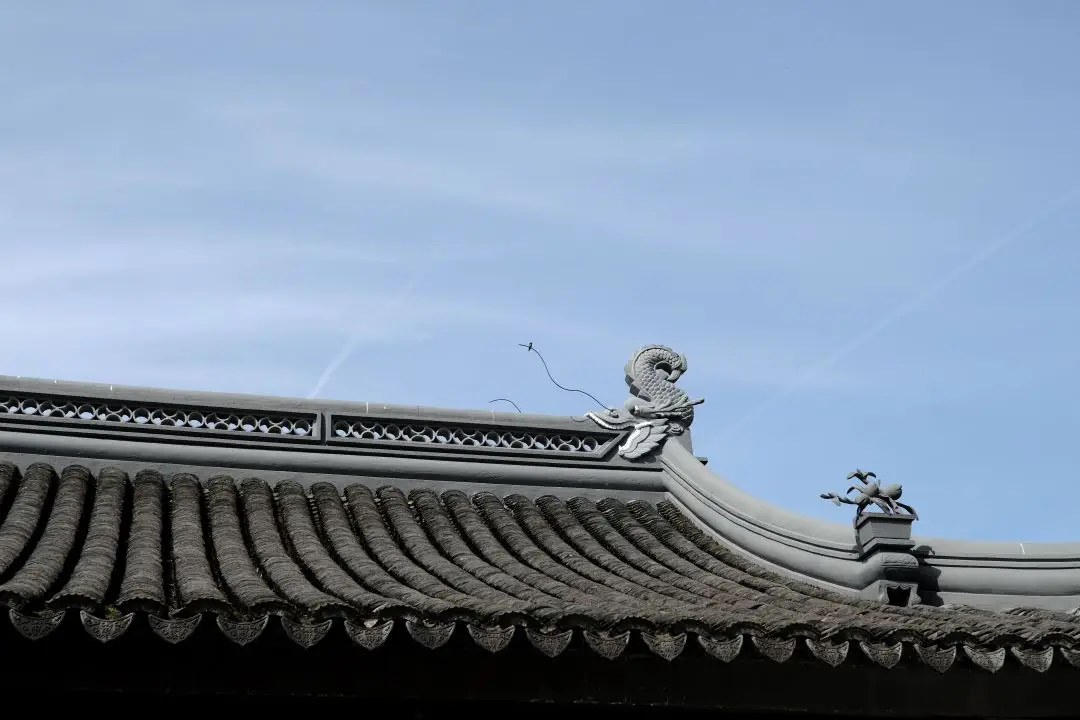
The Carp Leaps Over the Dragon Gate, in the garden
Five hundred years ago, a classical Chinese garden like Lan Su would likely have belonged to an established scholar and his immediate family. So this motif would have felt especially meaningful in a setting like this one. Gardens were places not only of beauty, but in a way, self-cultivation.
And honestly, the carp-to-dragon idea still feels very familiar today, especially if you grew up in an East Asian household. There is a Chinese saying: 望子成龍,望女成鳳 (wàng zǐ chéng lóng, wàng nǚ chéng fèng) —“parents hope their sons become dragons and their daughters become phoenixes.” In other words: study hard, get into a good school, get a respectable job, and make the family proud. Doctor. Lawyer. CEO. Something with a title that can be announced dramatically to relatives over dinner.
The underlying wish is loving, of course. Parents want their children to thrive. But it can also come with a lot of pressure. The carp must leap! The dragon awaits!
Can you imagine my mom’s face when she found out I got into a Theatre Arts program for college?
I think she briefly wondered whether her carp had taken a very artistic detour.
And yet, that is also why I love this motif. Beneath the pressure and the punchline is a deeper idea: that your future is not fixed at birth. The carp is not born a dragon. It becomes one through persistence, courage, and determination. 鯉躍龍門 reminds us that transformation is earned, and that changing your fate is possible.
In that sense, the Dragon Gate is not only about status or success. It is about resilience. It is about making your own path. Whether you become a scholar, an artist, or something your mother needs a little time to process, the leap is still yours to make.


Venus Sun
Senior Director of Experience
Lan Su Chinese Garden
Leave a Reply