
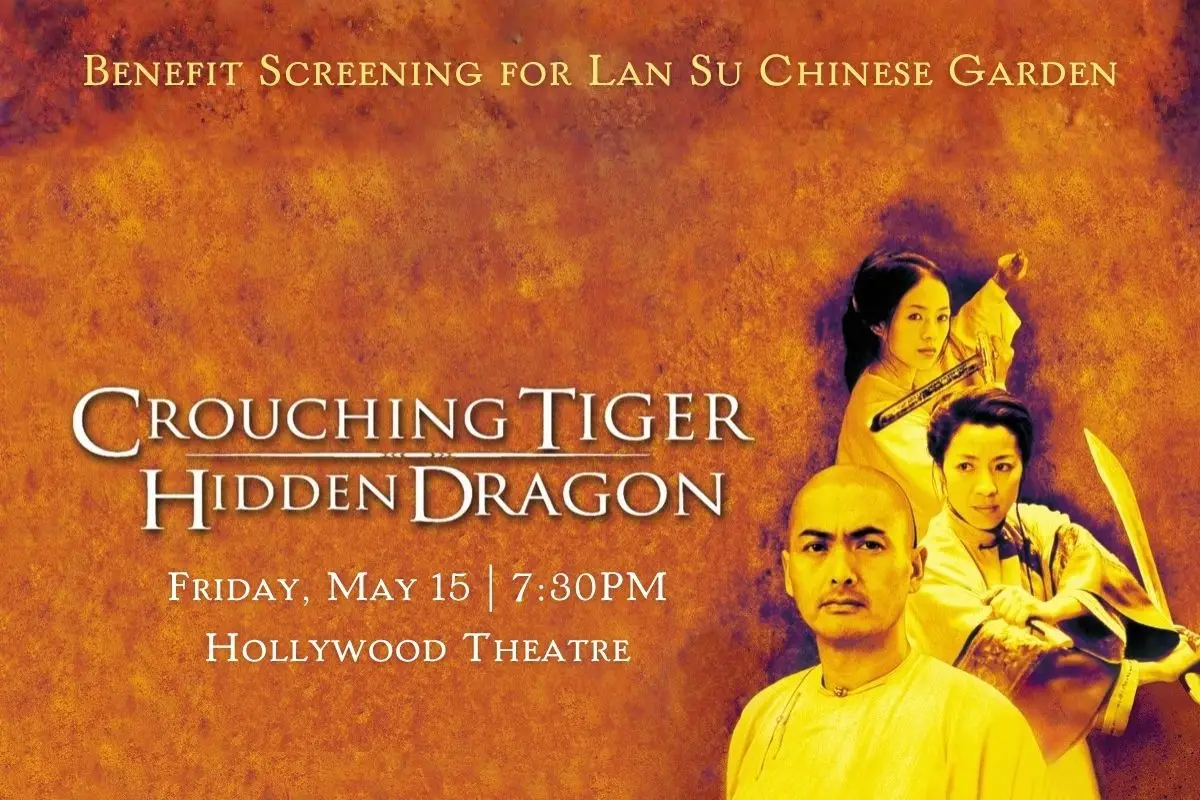
There are films you watch, and then there are films you carry with you. Crouching Tiger, Hidden Dragon (臥虎藏龍) is one I have been quietly carrying for years, a wuxia novel adapted into cinema with remarkable grace.
At first glance, it dazzles with gravity-defying sword fights: bodies gliding across rooftops, drifting through bamboo forests, as if the laws of the world have momentarily loosened their grip. Yet those “flights” are not simply about escape. They are brief suspensions of restraint. In a world shaped by Confucian values, where duty, hierarchy, and self-discipline define one’s place, the sword becomes the only language through which freedom can be expressed. Every leap is a quiet rebellion. Every duel is a conversation of emotions too disciplined to be spoken aloud.
This is the heart of 武俠 (wuxia), a genre of “martial heroes.” These stories unfold in 江湖 (jianghu), literally “rivers and lakes,” though it does not mean a literal place.

It is an imagined social world outside ordinary life, where fighters, outlaws, scholars, and seekers move by their own codes of loyalty and honor. In jianghu, one might step outside rigid structures, although never fully escape them. Desire lingers there, often deferred or sacrificed.
In this landscape, three lives intertwine with aching precision.

Li Mu Bai, portrayed by my favorite actor of all time, Chow Yun-fat (he may now be in his 70s, but seriously, you should see him in his 30s. Many Chinese girls, eight-year-old me included, wanted to marry him when we grew up), is a swordsman with the soul of a scholar. His strength lies in restraint. He seeks enlightenment, even as he is quietly tethered to a love he will never claim.

Yu Shu Lien, played by the one and only Michelle Yeoh, carries that same love with steady grace. Between her and Li Mu Bai exists a profound unspoken understanding shaped by loyalty, timing, and self-denial. Their story is full of feeling, made more powerful because so little of it is acted upon. If longing could be measured, theirs would probably break the scale.

And then there is Yu Jiaolong, portrayed by Zhang Ziyi, whom you may recognize from Memoirs of a Geisha. Her name, Yu Jiaolong, translates to something like “precious jade dragon,” which sounds delicate and refined. You will quickly realize she is not exactly that delicate. She is restless and defiant, a noble young woman dreaming of
escape from a rigid life and arranged marriage. In many ways, she is the “hidden dragon” of the title, full of untamed energy and unrealized power. Her movements are the most unrestrained, her flights the highest, yet even she cannot outrun consequence.
Growing up in the Chinese-speaking world, wuxia novels that became TV shows and films were our cinematic universe, our superheroes long before Star Wars, Marvel, and DC. This film is a perfect example. Under the direction of Ang Lee, the 2000 adaptation becomes something deeply resonant across cultures. What I admire most is his ability to tell stories of Chinese culture beyond the surface. He does not present a polished version. He brings in the good, the bad, and sometimes the messy parts of the culture through the choices his characters make. You can probably see why I am such a fan. It looks like a Chinese martial arts movie. It is so much more.
On May 15, Lan Su is partnering with Portland’s Hollywood Theatre for a special 35mm screening of Crouching Tiger, Hidden Dragon in support of Lan Su Chinese Garden, and I cannot think of a better film to share with you. Summit Wushu will kick off the experience with a live martial arts performance.
If you have not seen it, this is your opportunity. If you have, come revisit the 35mm version with me. I will happily nerd out with you afterward.
Tickets are now available on the Hollywood Theatre website. If you would like to explore more of my favorite Taiwanese director and his films, I also wrote about Ang Lee’s very first movie, Pushing Hands, in a previous Cultural Spotlight.


Venus Sun
Senior Director of Experience
Lan Su Chinese Garden
Leave a Reply