
Lan Su Chinese Garden on Screen
You might have visited Lan Su Chinese Garden, but did you know millions of viewers around the world may have already seen the garden on their TV screens?
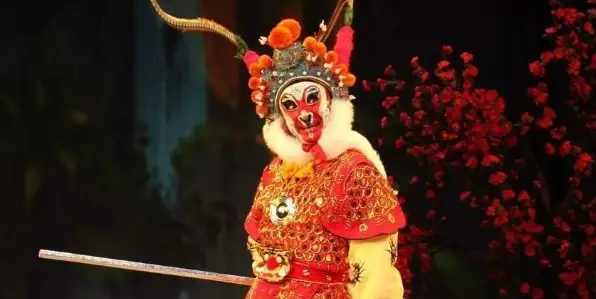
Later this month, Lan Su will become the first stop of the Oregon Film Trail in Portland, recognizing its appearances in the TV shows Portlandia* and The Librarians*. In Portlandia, the garden became a date spot for Carrie Brownstein and Fred Armisen and their estranged family. In The Librarians, Lan Su transformed into Shangri-La and the secret lair of Sun Wukong, a.k.a. the legendary Monkey King!

I had a fun afternoon teaching actor Lindy Booth her Mandarin lines in the episode.
I was here during The Librarians filming in 2016, back in my early Lan Su days. The garden closed for three days, and suddenly our quiet pavilions were filled with cameras, actors, crew members, and endless craft service snacks. I got to see some of my favorite actors, including Noah Wyle and Christian Kane, up close; get recruited to be Lindy Booth’s Chinese instructor to help with her Mandarin lines; and watch Ernie Reyes Jr. bring the Monkey King to life with exactly the kind of playful, mischievous energy you would expect from the character.
And honestly, my favorite memory was seeing such a creative interpretation of the Monkey King, a beloved character I grew up with, given new life in a TV show filmed in the garden where I work. Pretty cool life experience, I’d say.

Ah, yes, the Monkey King! Let me tell you about him.
Monkey King and me! Photo taken during the filming of the Librarians at Lan Su Chinese Garden.
Known in Chinese as Sun Wukong, the Monkey King is the unforgettable hero of Journey to the West, one of China’s most famous classic novels. He is a magical monkey with shape-shifting powers, impossible confidence, and just enough chaos to make heaven deeply regret hiring him.

In the novel, after being punished and imprisoned beneath a mountain for 500 years, Sun Wukong is entrusted by the Buddha to protect the monk Tang Sanzang on a long and dangerous journey to India to retrieve Buddhist scriptures and bring them back to China. Across the novel’s 100 chapters, the group faces demons, spirits, and countless supernatural challenges along the way.
If you have heard of the Monkey King, here are five things you may not know about him:
1. His first heavenly job was… horse manager.
Before becoming the legendary Monkey King, Sun Wukong was given a minor heavenly government position called 弼馬溫 (Bì Mǎ Wēn), basically the celestial horse manager. The problem? He was terrible at it. When he learned the title was considered low-ranking, he stormed off, declared himself “Great Sage Equal to Heaven,” and accidentally turned a simple HR issue into a heavenly crisis.
2. He became immortal by eating magical peaches.

One of many, many troubles the Monkey King got himself into was to sneaks into heaven’s peach garden and eats the peaches of immortality meant for the gods. The stunt helped make peaches a symbol of longevity in Chinese culture. At Lan Su, you can even spot a peach stone statue carving on the roof of the Hall of Brocade Clouds, as a symbol of longevity. Today, many people in China still
celebrate milestone birthdays with peach-shaped buns called 壽桃 (shòutáo). Isn’t it interesting when novels directly contribute to the birth of a cultural symbol?
3. The pilgrimage was inspired by a real journey.
The monk Tang Sanzang that was being protected by the Monkey King in the story might actually be the real hero in history. The character was inspired by the real 7th-century Buddhist monk Xuanzang. His 17-year pilgrimage to India brought back more than 650 Buddhist texts, significantly advancing Chinese Buddhism, and his travelogue later became the inspiration for the author of Journey to the West. So, no, in the real story, Monkey King wasn’t part of it. But 17 years traveling from China to India, that is one incredible journey to the west!
4. The novel may have been political satire.
Beneath all the magic and monster battles, many scholars have read Journey to the West as a playful, indirect critique of corruption and bureaucracy during the Ming dynasty. Along the journey, the pilgrims often encounter “demons” disguised as rulers, monks, and powerful authorities. Fantasy gave writers a clever way of commenting on society without pointing too directly at the government.
5. The Monkey King is still everywhere today.

500 years later, Sun Wukong still leaps across opera stages, movies, television, even video games (most recently, the famous Black Myth: Wukong in PS5), and now, part of Lan Su’s own screen story.
On May 28, an official Oregon Film Trail sign will be unveiled at Lan Su during a small ceremony recognizing the garden as a filming location. Come back to see the sign — and if you have not watched Portlandia or The Librarians yet, go find them online and see if you can spot the garden yourself.
** Find Lan Su in the TV shows: The Librarians — Season 3, Episode 9; Portlandia — Season 5, Episode 2.


Venus Sun
Senior Director of Experience
Lan Su Chinese Garden
Leave a Reply